Interrailing Switzerland: Route, Itinerary and Guide
Some links in this post contain affiliate links. I receive a small commission if you use the links at no extra cost to you! Happy reading 😀
Interrailing Switzerland? Yay! In this post, I list everything you need to know about travelling around Switzerland by train, and how to make the most out of your trip to one of my favourite European countries!
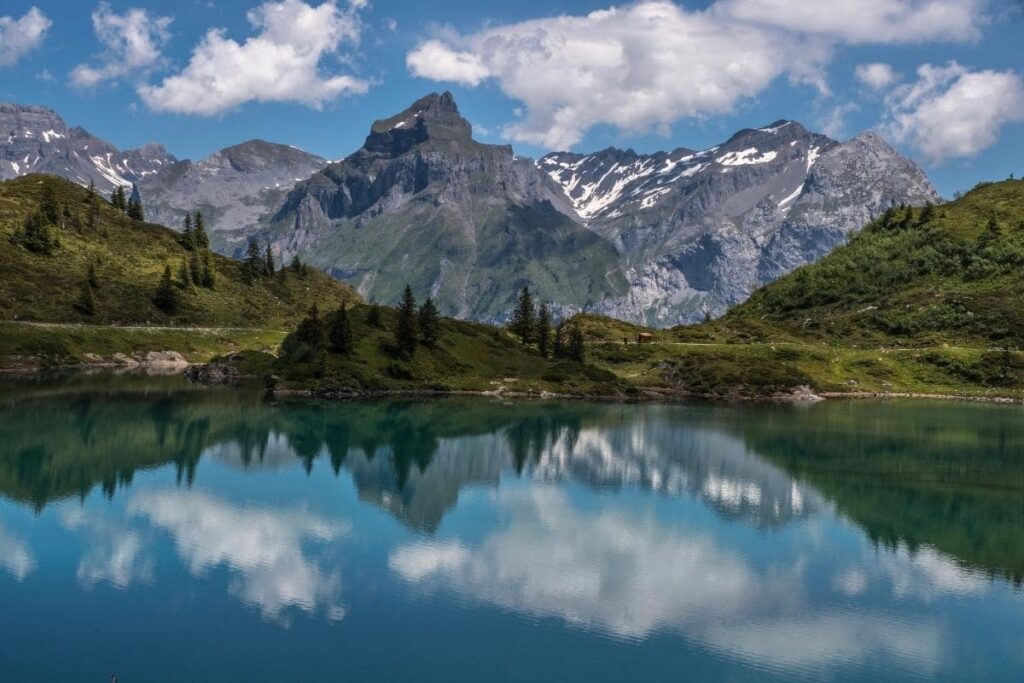
So, you’re planning a trip to Switzerland?
You’re in for a treat.
And if you’re interrailing Switzerland, you’re in for an even bigger treat.
Travelling around Switzerland by train is by far the best way to see the country, especially if you’re visiting for the first time.
The trains are clean, efficient and fast, and looking out the window as you travel through the country is entertainment in itself.
By interrailing around Switzerland and following one of my routes, you’ll get to see all the major cities, as well as some of the smaller towns and villages.
And, of course, you’ll have plenty of opportunities to sample the Swiss food and drink (which is what TRULY lights me up).
Just writing this blog post now brings back so many happy memories of visiting one of my favourite European countries. It really is a hidden gem, and a country that isn’t talked about enough.
In this post, I’ll outline everything you need to know about travelling Switzerland by train, and using your interrailing pass. From what to pack, eat, see, do, wear and plan, I’ve got you covered.
If you’re in a rush, just check the contents to skip to the section that interests you the most. And if not, grab a cuppa, put your feet up, and let’s get planning an EPIC Switzerland trip!
Interrailing Europe? I’ve also written guides for Italy, Spain and France. Check them out! 🥰 (I appreciate you!)
Not sure which backpack to buy for interrailing Europe? Read my post to find the best backpack for you!

🗺️ Interrailing Europe? Yay! Book your interrailing pass here!
Train Lines in Switzerland
There are several different train routes that crisscross Switzerland, each offering passengers a unique way to experience the country’s natural beauty.
From the Glacier Express route to the Golden Pass Line, they’re a great way to use your interrail pass or Swiss Travel Pass, and private railways include high-speed trains, regional trains and slow trains with seat reservations.
The Golden Pass Line is one of the most popular tourist routes. It takes passengers through some of Switzerland’s most iconic scenery, including the snow-capped Alps and pristine lakeside villages.
For those looking for a more adventurous journey, the Glacier Express is the perfect choice.
Slowly winding its way through mountainous terrain, the Glacier Express provides riders with breathtaking views of some of Switzerland’s most impressive glaciers.
Interlaken is one of the best places in Switzerland to access the country’s incredible rail system.
The Interlaken Ost train station is a hub for two of Switzerland’s most iconic trains – the Voralpen Express and the Bernina Express.
The Voralpen Express winds its way through the stunning landscapes of central Switzerland, while the Bernina Express takes passengers on a journey through the Alps, offering unparalleled views of some of Europe’s highest peaks.
Whether you’re looking to explore Switzerland’s natural beauty or simply want to sit back and enjoy the ride, Interlaken is the perfect place to hop aboard one of these legendary trains, which I’ll delve into a bit further later!
Then there is the Gotthard Panorama Express, which interlaces Switzerland’s stunning mountains, valleys, lakes and meadows. And, as the name suggests, there are panoramic windows in every carriage so you can make the most of the views!
The trip takes around three hours, and there are plenty of stops along the way so you can explore some of the highlights of the route, including the Devil’s Bridge and the Reichenau Falls.
🤩 NOTE: All train lines can be used with the Interrail Pass (you may just need a seat reservation) or the Swiss Travel Pass.

Interrailing Switzerland: The Routes
Below I have listed 3 possible train routes around Switzerland, with some information underneath. All routes start in Zurich (best for international arrivals), but can be manipulated to however you see fit.
All routes have the flexibility of staying in each location for at least 2 nights. If you require less/more, just adjust the route accordingly.
You can use these routes with your interrail pass (European residents), Eurail pass (non-European residents) or Swiss travel pass (both European and non-European residents).
I will also list some day trips from certain areas to ensure you make your Switzerland trip the adventure of a lifetime!
Enjoy!
🗺️ Interrailing Europe? Yay! Book your interrailing pass here!
Want to interrail on a budget? I’ve got you covered. Check out my recent post: How to Interrail on a Budget: Interrail Europe CHEAP! (2022)
🗺️ My interrailing must-have: Solo travelling but still want to take photos? 📸 I’ve found the most perfect adjustable tripod that’s lightweight and easy to set up (you don’t want any awkward moments alone, I know how it feels!)

Route 1: 2 Weeks
Zurich > Interlaken > Spiez > Zweisimmen > Montreux
Start your Switzerland two-week route in Zurich.
Board the train from Zurich to Interlaken on the “pink” line (which takes about 2.45 hours) and then carry on to the adventure spot of Spiez. Continue to Zweisimmen, known for it’s mountains and being the gateway to the Gstaad region.
Finish your trip by arriving in Montreux, which is one of my favourite spots in Switzerland!
The town borders Lake Geneva, and is known for its beauty and traditional Swiss buildings. I spent a few nights here, but could have spent way longer!
🗺️ My interrailing must-have: Well, it’s a little more advanced, but if you want to take high-quality photos, make sure you invest in a good camera. This doesn’t have to be thousands of pounds, and our favourite is the Canon EOS 6D Mark II.

Route 2: 3 Weeks
Zurich > Basel > Geneva > Bern > Interlaken > Spiez > Zweisimmen > Montreux
This route includes a stop-off in Basel, which is Switzerland’s third most populous city, and Geneva, its second!
Both have so much to offer and are great for city fans.
The route then continues to Bern, known for its cool architecture and medieval clocktower, following on to Interlaken and some of the most scenic spots.
🗺️ My interrailing must-have: Don’t forget an additional memory card and hard drive for saving your photos on the road!
Route 2: 4 Weeks
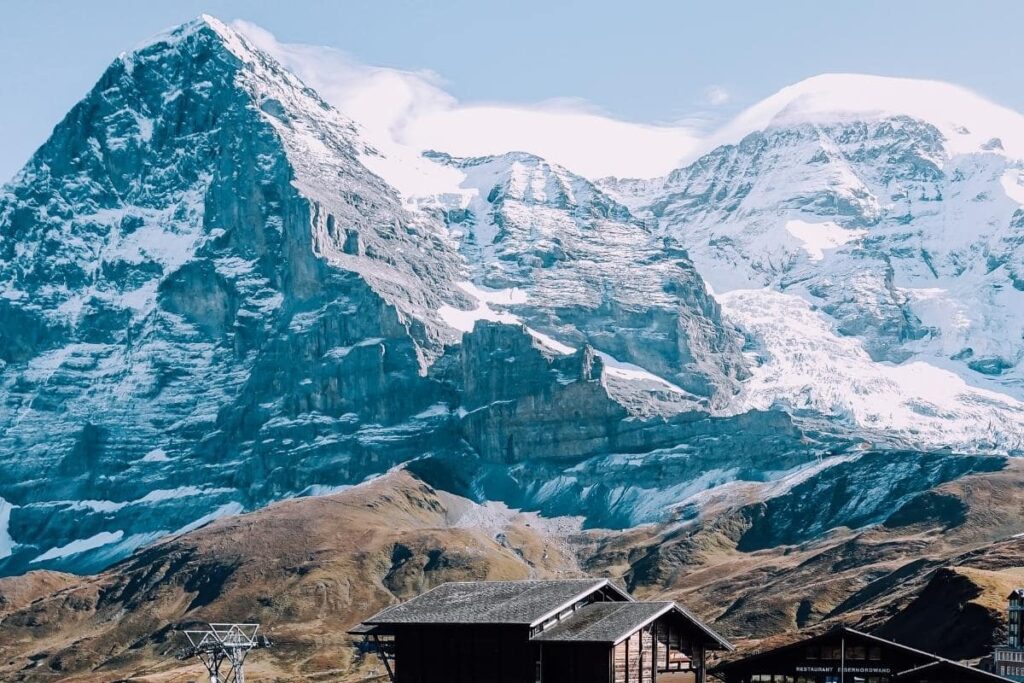
Zurich > Basel > Geneva > Bern > Interlaken > Spiez > Zweisimmen > Montreux > Zermatt > St Mortiz > St Gallen > Zurich
Now there is a LOT in this itinerary, and it may seem overwhelming! If this is too many locations for you, I recommend following the route up until at least Zermatt.
From there, some of the trains are a bit longer (but so worth it if you have the time!)
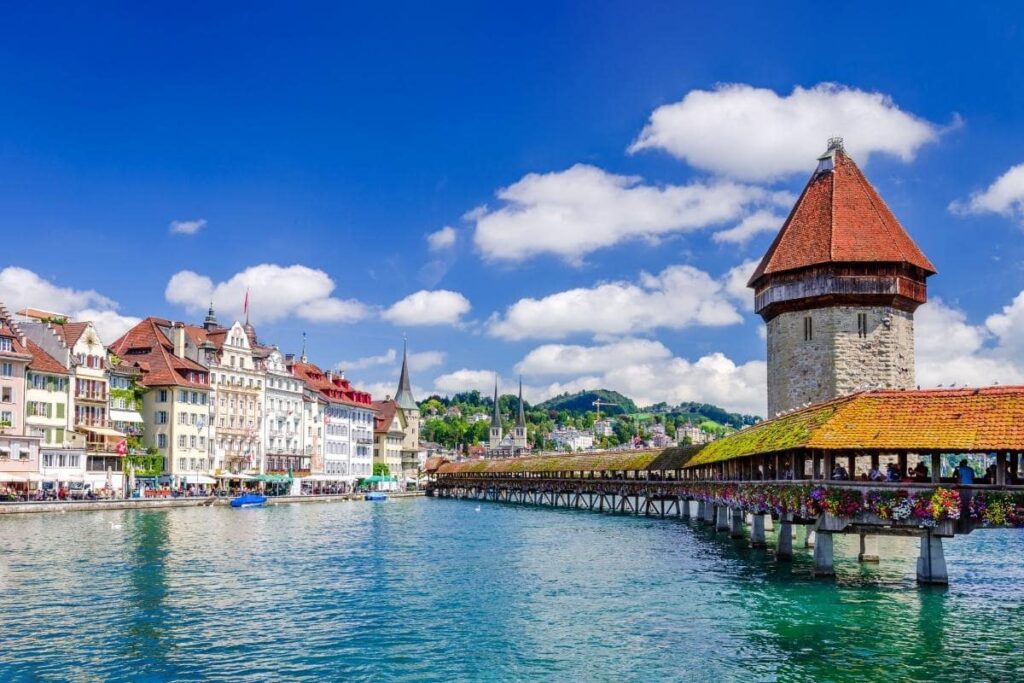
🤩 NOTE: If you have extra time, schedule a trip to Lugano and Lucerne.
🗺️ My interrailing must-have: If you’re travelling Europe, make sure you pack a Microfibre towel (and this one linked is super pretty too). They make life easier when getting in and out of the water, they’re portable and easy to carry on any kind of day trip. I’ve had mine for years and use it on every beach trip!
Interrailing Switzerland: Train Durations
Let’s break these train journeys down into times, so you have more of an idea of how long you’ll be travelling.
Zurich > Interlaken: 2.45 hours
Zurich > Basel: 50 minutes
Interlaken > Spiez: 20 minutes
Spiez > Zweisimmen: 45 minutes
Zweisimmen > Montreux: 2.50 hours
Montreux > Zermatt: 3 hours
Zermatt > St Mortiz: 7 hours
St Moritz > St Gallen: 3.5 hours
St Gallen > Zurich: 1 hour
If you’re still booking flights, I recommend checking lastminute.com for the latest deals. Recently, we were able to save £50 on our flights just by booking through Last Minute!
Need to know about train travel in Switzerland
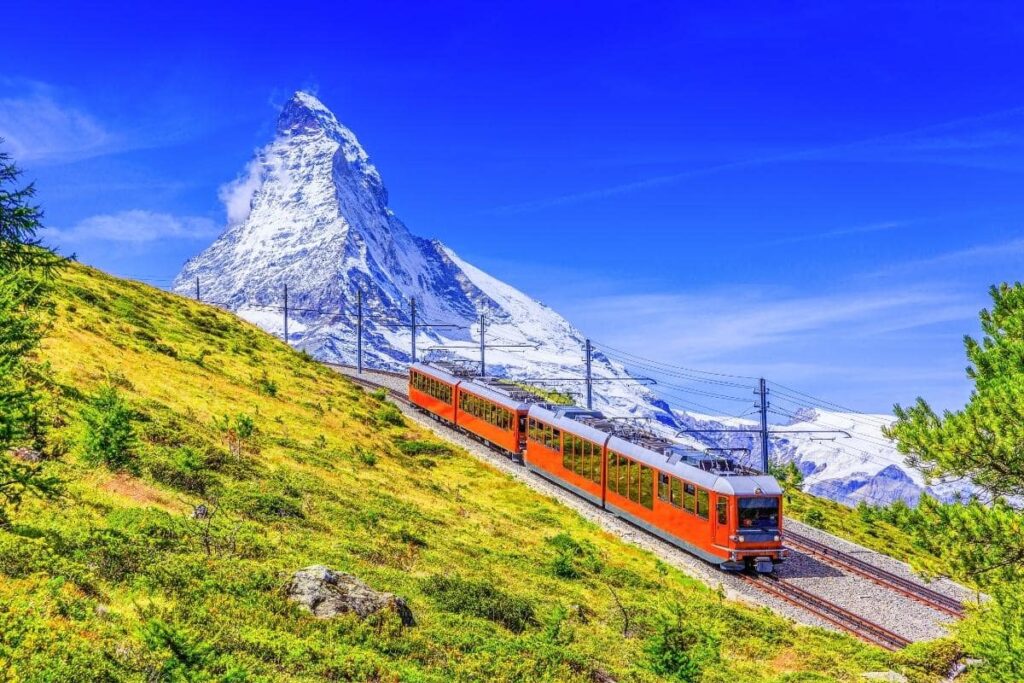
What do you need to know about train travel in Switzerland? Let’s break down some facts.
- The service on Swiss trains is is top-notch, and the trains are some of the most punctual in the world (trust me, they don’t run a minute late!).
- There’s no need to worry about getting lost; the Swiss rail system is one of the most efficient in Europe.
- You can also use buses, trams, boats, cable cars and mountain rails around Switzerland.
- Seat reservations are required on most Swiss trains.
- Trains in Switzerland are super safe, so if you’re solo travelling, there’s no need to worry about safety. Just use your common sense, as always!
- All routes and timings can be viewed on the SBB app. If you are interrailing Switzerland (or using your Eurail pass) I highly recommend downloading this for your trip.
- There are lockers at nearly every main city station, making it perfect if you want to dump your backpack for the day.
- Ensure you are sitting in the class you have booked your reservation for, and if the doors aren’t opening at a stop, just press the button next to the door to open.
- The views from the train windows are ridiculously good. Put your phone or laptop away and just enjoy it! Travelling Switzerland by train is by far one of the best ways to see the country.

Can you use your interrail pass in Switzerland?
Yes, an Interrail or Eurail Global Pass (including other passes) is valid to use in Switzerland.
If you’re ONLY visiting Switzerland, I recommend an Interrail One-Country Pass, as it will work out cheaper.
Interrail passes are valid for travel on all of Switzerland’s national railways, so you can easily get around to different destinations.
Your interrail (or Eurail) pass will work on all SBB train services, including regional, high-speed, international and night trains. Some private companies also allow interrail passes, but just check online first.
Whilst interrailing Switzerland, you will have to book seat reservations for most of your trains.
Unfortunately, your interrail pass will not cover mountain railways or cable cars, but you may get a discount. Always remember to show your interrail pass when booking.
Plus, an Interrail pass in Switzerland offers discounts on many other attractions, so you can save money while you’re exploring (which I’ll explain later).
And if you need any help along the way, the friendly Interrail staff are always happy to assist!
🗺️ My interrailing must-have: A portable power bank. Don’t get caught short and lose your phone battery whilst travelling! If you’re solo travelling, you’re going to rely on it to get you from A to B, AND have your interrail mobile pass close to hand!
Night trains whilst interrailing Switzerland
Most of the journeys you will make in Switzerland will be short, but there is a chance you might want to board a sleeper train to save money on accommodation and gain back some time to explore.
If you’re arriving from another country like France, Italy, Croatia or Germany, the chances are you would have arrived by sleeper train.
Remember: ALL sleeper trains whilst interrailing require a reservation. Prices range between 20 – 40 EUR.
For example, there are sleeper trains such as:
Berlin > Zurich: 8 hours (OBB Nightjet)
Zagreb > Zurich: 14 hours (Euronight Lisinski)
Amsterdam > Zurich: 14 hours (OBB Nightjet)
Budapest > Zurich: 14 hours (Euronight Sleeper)
🗺️ My world travel must-have: The tap water around the world isn’t always safe to drink, so I use my filter water bottle pretty much every day to keep myself hydrated. I take it everywhere with me, and it works in every country where you can’t drink tap water! You can grab yours here. 🚰
What language is spoken in Switzerland?
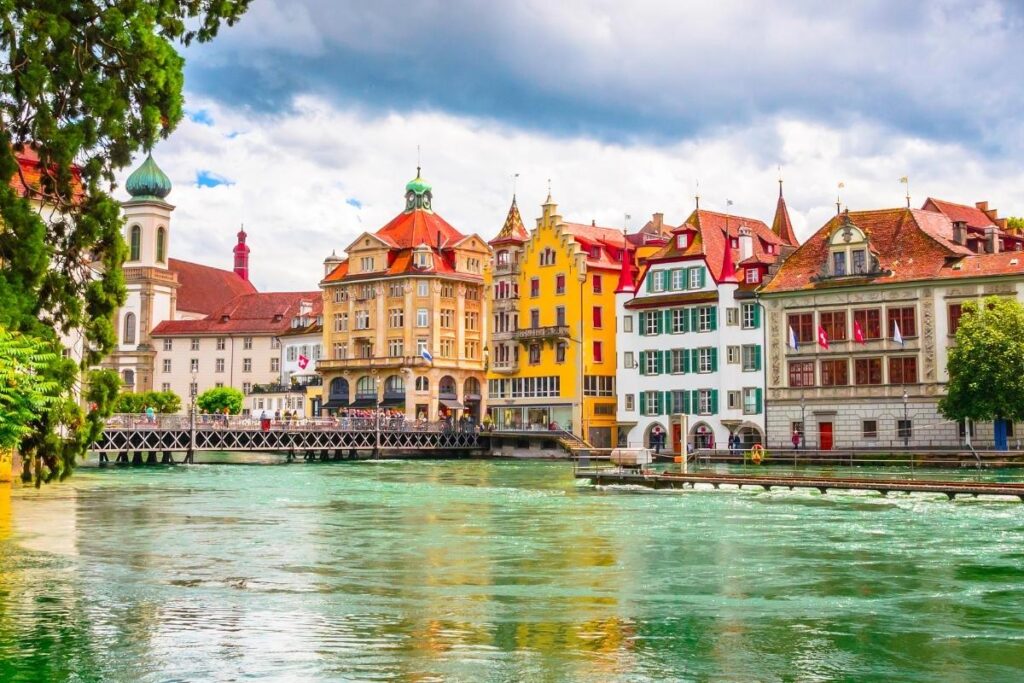
Well, there are four official languages in Switzerland; German, French, Italian, and Romansh. All are spoken in different regions.
Swiss German is spoken in the northern, eastern, and central parts of Switzerland, and is spoken by over 63% of the population. This makes it the ‘primary’ language.
Swiss French is the second most spoken language and is mostly spoken in Western Switzerland (like Geneva and Jura).
Italian is spoken in the canton of Ticino and some southern parts of Switzerland. This area is known for having a real Italian feel to it, in the culture and surroundings.
Finally, Romansh is spoken by around 37,000 people in Switzerland. It is spoken primarily in the Rhine Valley of Switzerland.
🗺️ My world travel must-have: Whilst out during the day, I use a tote bag to hold my belongings like my camera, notebook, purse and Microfibre towel. It’s easier to pack away than a big beach bag, and can be neatly tucked away when you don’t need it!
What is Interrailing?
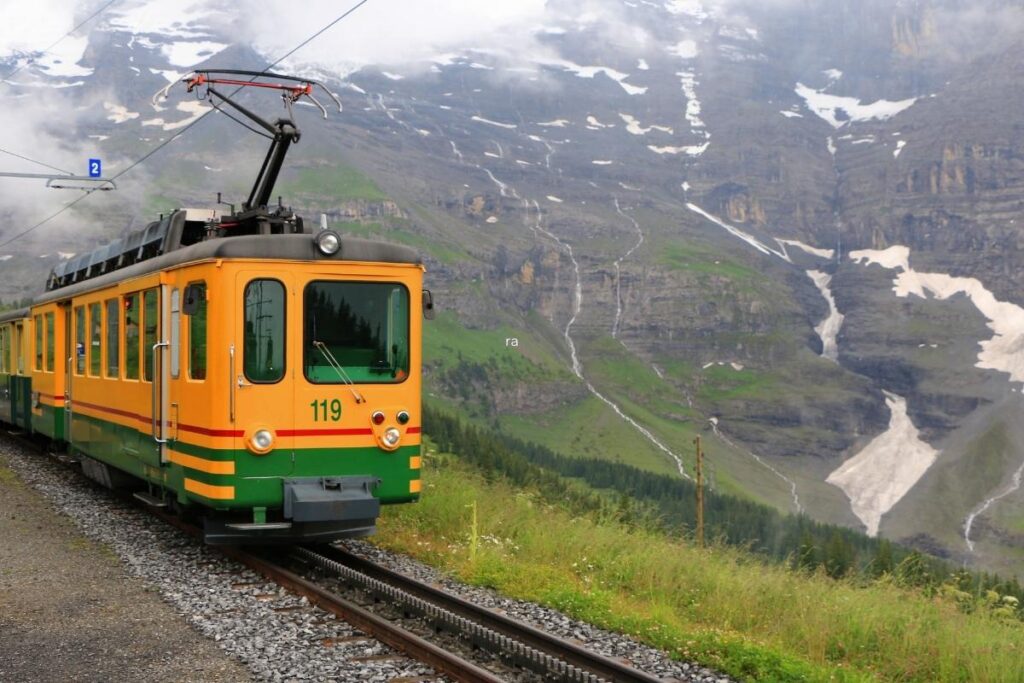
Interrailing Switzerland is pretty much what it sounds like – you hop on a train and see as much of Switzerland as you can!
It’s a great way to explore the country, especially if you’re short on time.
You can buy Interrail passes that allow you unlimited travel for a certain period of time, or you can buy tickets for specific journeys.
The best part about Interrailing Switzerland is that you can go at your own pace – there’s no need to rush from place to place. You can just sit back, relax, and enjoy the scenery!
Plus, your interrail mobile pass can always be kept close to hand on your smartphone.
NOTE: There’s a difference between the adult pass, Swiss Travel Pass, Interrail Switzerland Pass, Interrail Global Pass and the separate youth pass. Be sure to check out the differences here.
What to pack for interrailing Switzerland
Interrailing Switzerland sounds like a dream – and it is!
But there’s a lot to think about before you jet off, like what to pack.
Here’s my top tips on what you’ll need to take with you:
- A valid Interrail pass, duh! Make sure you have this first and foremost.
- A map of Switzerland (or a trusty book like this one). This might seem obvious, but trust us, it’s worth its weight in gold when you’re trying to navigate your way around a new country.
- Comfortable shoes. You’ll be doing a lot of walking, so make sure your footwear is up to the task.
- Warm clothes. Even in summer, the temperature can drop at night, so pack a few layers just in case.
Staying in hostels? Don’t forget to pack:
- A padlock: to keep your valuables secure when you leave your hostel room.
- A hanging wash bag: to make sure all your toiletries are kept in one place, and won’t get confused with anyone elses
- Speakers: because, well, who doesn’t love music? Just make sure everyone in your room gets a chance to pick a song! (And no one minds you playing the music)
- A microfibre towel: Not all hostels will provide you with towels for free. Bring your own to save extra ££.
- Earphones: for loud nights and disruptions to your sleep.
- Flip flops: if you’re using shared showers.
- Eyemask: for uninterrupted sleep.
- World travel adapter or an extension lead: so you’re not using more than one plug!
- Your laptop or tablet: for movie nights, of course! 🍿
You can check out more about packing for interrailing here: What To Pack Interrailing Europe: Packing List Essentials.
🇨🇭Check out these black gym leggings for your trip as they were super comfortable and perfect for long hikes in the mountains.
🗺️ My interrailing must-have: A wheelie backpack! Check out my favourite, the Osprey 65L wheeled backpack. It’s dreamy for long-term trips and when you need more than a carry-on!
Best destinations in Switzerland
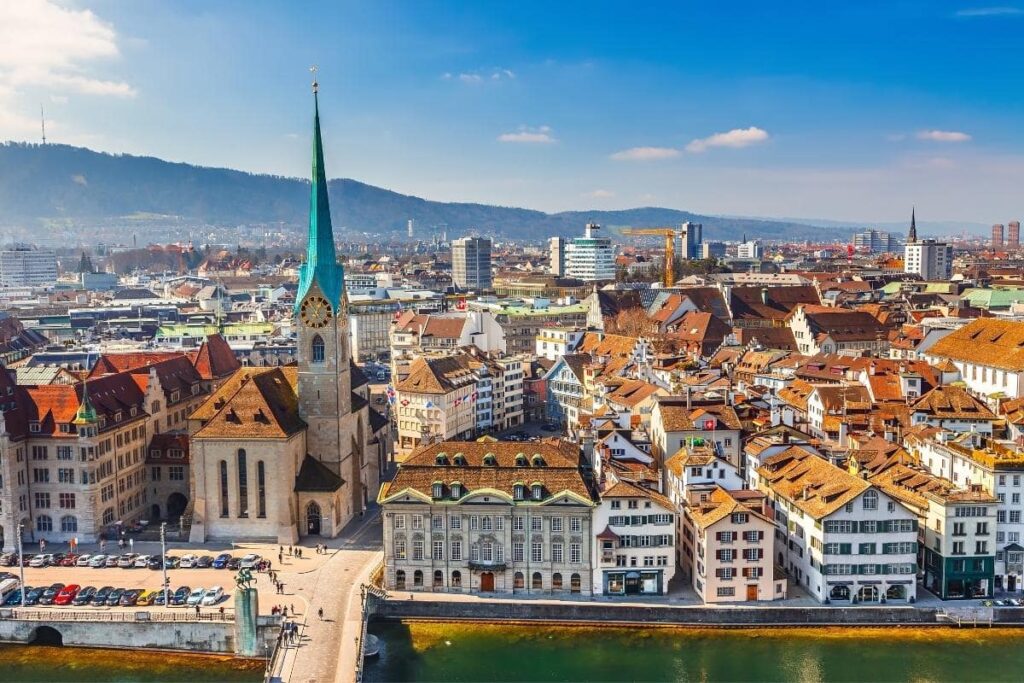
Zurich
Zurich is a great city for those who love to explore and be outdoors.
There are plenty of things to do, whether you’re looking for an adrenaline-pumping activity or a relaxing day in nature. For those who love to hike, the Zurich area has numerous trails of varying difficulty levels.
If you’re looking for something more challenging, you can try your hand at rock climbing or mountaineering.
For water lovers, Zurich also offers plenty of opportunities for swimming, sailing, and windsurfing.
And of course, no visit to Zurich would be complete without exploring the Old Town and witnessing the stunning architecture of the city’s many churches and cathedrals.
Whatever your interests, Zurich has something to offer everyone.
Ooooh, and if you’re a vegan, be sure to check out the best vegan restaurants in Zurich by Veggies Abroad. You won’t find hidden gems like this anywhere else!
🇨🇭Love taking cool photos? Our drone is one of the best investments we’ve ever made. We love it, and the photos can be downloaded straight onto our phones! This drone also films in portrait mode (the ONLY one on the market) so you don’t lose any quality when uploading to social media. It’s also given us some hilarious travel memories 😂
Interlaken
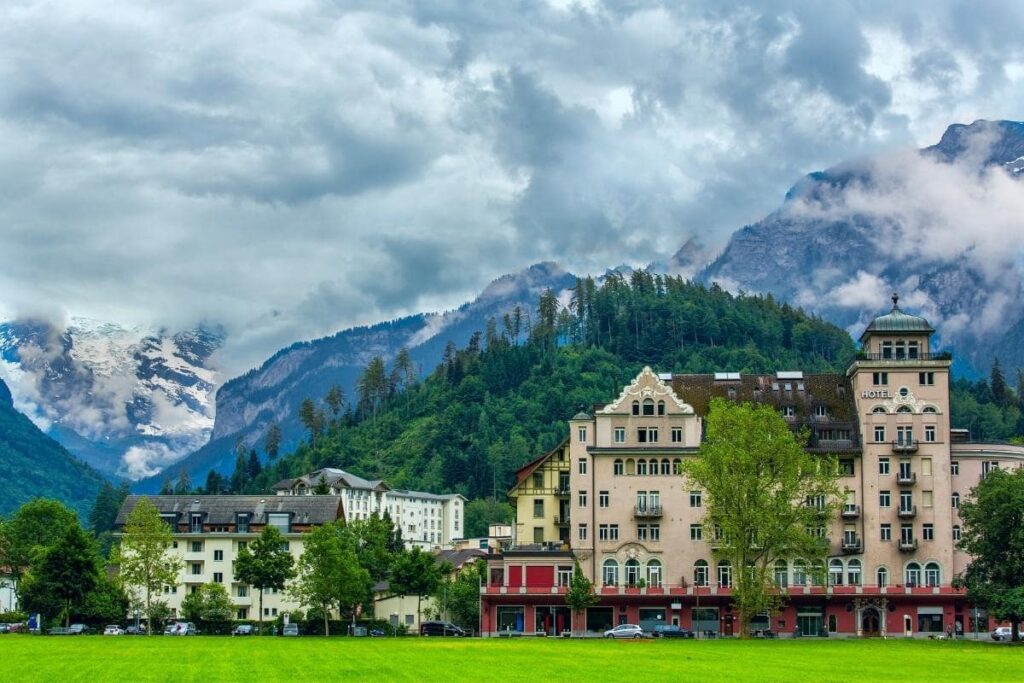
Interlaken is a Swiss town that’s situated between two lakes: Lake Thun and Lake Brienz.
It’s a popular destination for tourists who want to experience the beauty of the Swiss Alps.
There are plenty of things to do in Interlaken, whether you’re looking for an adrenaline-pumping adventure or a leisurely afternoon stroll.
If you’re feeling adventurous, you can go paragliding, canyoning, or skydiving.
Or, if you’d prefer to stay on solid ground, you can go hiking, biking, or take a cable car ride up to the nearby mountains. It’s a pretty special place!
🇨🇭 If you’re going to be swimming in the lakes in Switzerland, I’d recommend getting a Syncwire Waterproof Case. I’ve had mine for a few years and I’m able to swim underwater, take photos and videos and keep my belongings safe when I’m in the water!
Spiez
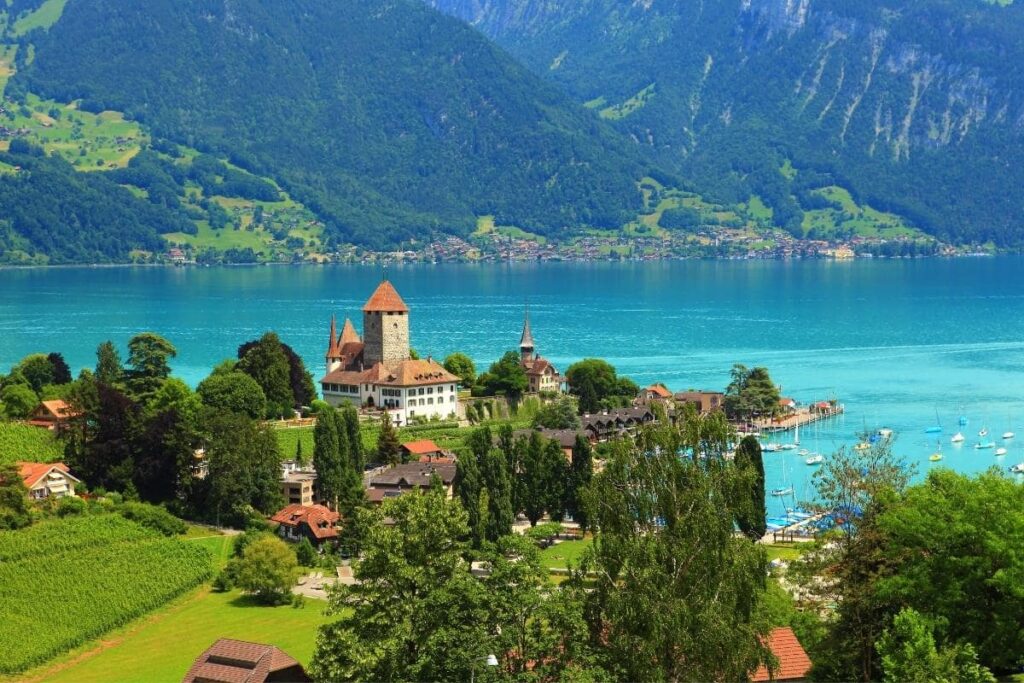
This lovely little town in the Swiss Alps has plenty to offer, from hiking and biking to swimming and sunbathing.
And of course, there’s plenty of delicious food and drink to be had.
Here are just a few of the best things to do in Spiez:
- Hike up to the Castle: Spiez Castle is a must-see, and the hike up is well worth it for the stunning views.
- Visit the Museum: Learn about the history of Spiez at the town’s Museum am See.
- Swim in the Lake: Take a dip in Lake Thun, or relax on one of the many beaches.
- Rent a Bike: There are plenty of bike paths to explore, or you can just ride around town.
- Enjoy the Food: From fondue to Raclette, there’s no shortage of delicious things eat in Spiez.
🇨🇭You don’t necessarily need hiking boots, but I wore mine on the walk. It made the walk a lot easier and I was much more stable, plus they helped me with other walks around the island. You can buy my favourites here.
St Moritz
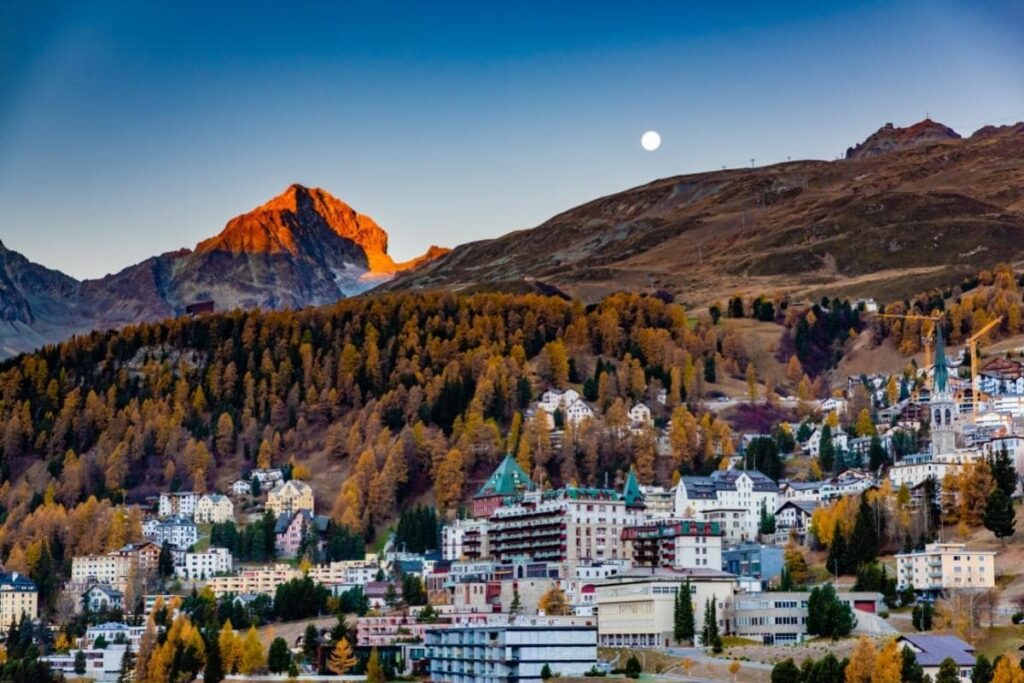
This chic Swiss resort town is known for its high-end shops and luxurious hotels, but there’s plenty to keep you entertained even if you’re on a budget!
If you’re looking for a little culture, head to the Engadiner Museum. Located in a beautiful 17th-century building, the museum houses an impressive collection of local art and artefacts. Best of all, admission is free!
For something a little more active, take a hike up Piz Nair. This popular mountain offers stunning views of the surrounding area, and it’s a great workout too.
Once you reach the top, be sure to stop by the small cafe for a well-deserved break.
And finally, no trip to St Moritz would be complete without indulging in some of the town’s famous glacier ice cream.
Made with milk from cows that graze on the local glaciers, this creamy treat is definitely worth splurging on. Just be sure to get it before it melts!
🇨🇭Make sure you pack water in an insulated water bottle. I use this Chilly one, which keeps my water freezing cold for over 24 hours! Some of the more remote areas in Switzerland will cost a TON to buy water, so be prepared!
Basel
Basel is a great city for visitors of all ages.
If you’re looking for things to do, here are some suggestions:
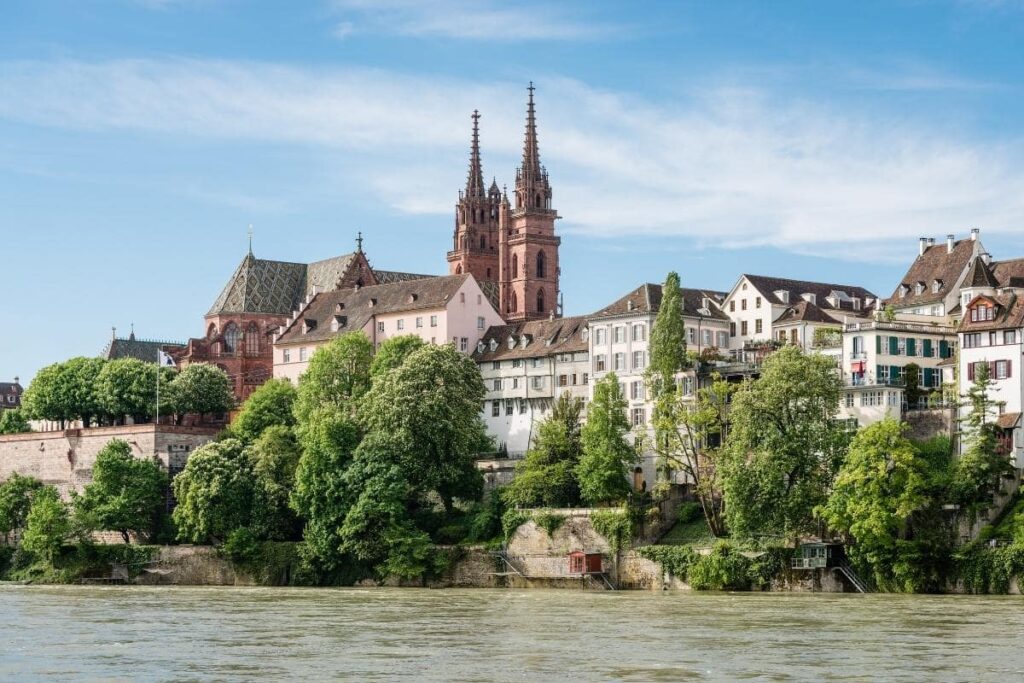
- Take a walk or bike ride along the Rhine River. You’ll get some exercise and fresh air, and you’ll be able to see some of Basel’s most famous landmarks, like the Munster Cathedral and Basel Zoo.
- Visit the old town. Basel’s old town is full of charming cobbled streets and historic buildings. Be sure to stop by the Town Hall, which dates back to the 14th century.
- If you’re feeling adventurous, take a day trip to Stein am Rhein. This quaint village is just a short train ride from Basel, and it’s well worth the journey. With its picturesque houses and medieval castle, Stein am Rhein will make you feel like you’ve stepped back in time.
- Spend an afternoon at one of Basel’s many museums. The city is home to a number of world-class museums, including the Kunstmuseum Basel (the Museum of Fine Arts) and the Natural History Museum.
- For something truly unique, go on a ghost tour of Basel!
When is the best time to visit Switzerland?
Switzerland is a country that has something for everyone, no matter what time of year you visit.
Each season has its own unique attractions and events, so it really depends on what you’re looking for on your trip.
Spring is a great time to visit if you love to ski or snowboard, as the slopes are open until late April.
In the summer, Switzerland is perfect for hiking and biking, with beautiful wildflower meadows and crystalline blue lakes.
Autumn brings stunning foliage and cosy festivals celebrating everything from wine to chocolate, while winter transforms the country into a veritable winter wonderland.
So when is the best time to visit Switzerland? The answer is any time of year, and it’s totally down to you!
Want to know more about interrailing? You’re in the right place! Check out:
- Interrailing Routes 3 Weeks: FOUR Routes You’ll Love!
- 21 Interrail Tips for First-Timers: Interrailing Europe
- Is the Interrail Pass Worth it? An Honest Review (2022)
- Backpacking Europe: A Beginners Step-by-Step Guide
- How to Interrail on a Budget: Interrail Europe CHEAP! (2022)
Where to stay in Switzerland
Choosing where to stay in Switzerland all depends on how much you want to spend.
- Hostels: If you’re on a tight budget, I recommend Hostelworld for booking shared dorm rooms. Unfortunately, even the dorm rooms are more expensive than in most other European countries. You’ll be paying around £30-50 for a shared dorm, or £100+ for privates.
- Hotels: If you do have a higher budget to splurge, hotel rooms cost over £100 a night. Luxury hotels? You’re looking at £400+.
- Airbnbs: Again, not for a budget backpacker, but if you’ve got the money to spend, I’d recommend them. You can also get some really unique and quirky stays if you look hard enough!
- Camping: One of the cheapest options is wild camping in Switzerland. Wild camping is legal in the mountains and you can book campsites all over the country. Just be sure to book campsites well in advance.
🗺️ Booking hostels? I always use Hostelworld as their deals are usually the cheapest. They also have reviews from other backpackers, and explain the vibe of the hostel (party, chill, social…) so you know exactly what you’re booking.
How to book trains in Switzerland
Switzerland’s trains are reliable, comfortable, and efficient, making them the perfect way to travel around the country.
Here’s everything you need to know about booking Switzerland train tickets.
First, you’ll need to decide on your interrailing pass. Then, look at the type of trains you want to take when travelling across Switzerland.
There are several different types of trains in Switzerland, including high-speed, regional, and mountain trains.
Once you’ve decided which type of train is right for you, you can book your tickets online or at a Swiss train station.
When booking online, be sure to use a reputable website like SBB.ch or Swiss Railways. If you have an interrail pass, booking just means getting your seat reservation.
Or, if you’re planning on taking multiple trains in Switzerland, it’s worth considering a Switzerland Rail Pass. A Switzerland Rail Pass allows you unlimited travel on most Swiss trains for a set period of time.
You can purchase a Switzerland Rail Pass at any Swiss train station or online.
Ensure you’re carrying your passport at all times on Swiss trains too!
🗺️ My interrailing must-have: I use my Insta Mini 11 to take photos on all of my trips. As they print instantly, they’re perfect for making a scrapbook and writing in all your favourite and funniest memories. I’ve even got my boyfriend joining in on it now too!
How much does interrailing Switzerland cost?
Well, do you want the good news or the bad news?
The truth is, Switzerland is expensive. According to Swissinfo.ch, Switzerland is one of the most expensive countries in the world. Not the best news for a broke backpacker, right?
But, of course, there ARE ways to keep the costs down and interrail Switzerland on a budget, which I will explain a bit more in an interrailing on a budget post (coming soon).
If you really do want to stick to a budget in Switzerland, I’d recommend saving at least £60-80 per day. This includes your accommodation, food, activities and everything else in between.
Want more than a dorm room and home-cooked food? You’re going to need to budget at least £100 a day. Sorry!
Want to interrail on a budget? I’ve got you covered. Check out my recent post: How to Interrail on a Budget: Interrail Europe CHEAP! (2022)
🗺️ My interrailing must-have: If you’re solo travelling, don’t forget to take earphones for busy and long trains! Listening to a podcast or tuning out from the noise is a lifesaver on a busy train.
Buying your Interrail Pass
If you’re planning on doing some rail travel around Europe, then an Interrail pass is definitely the way to go.
You can buy passes for 3 days, 7 days, or even a whole month, and they give you unlimited travel on most trains across Europe.
Not only that, but Interrail passes also come with a bunch of other benefits, like discounted rates on ferries and buses, and discounts at hostels and hotels.
Plus, if you’re under 26 years old, you get to travel for free on Friday nights and get a discounted pass!
So if you’re planning a European adventure, make sure to check out Interrail passes – they’ll save you time and money, and help you have the trip of a lifetime.
You can book your interrail pass here.
🗺️ My interrailing must-have: Solo travelling on your interrailing trip? Stay safe by carrying your cash or card in a money belt. I know it sounds silly, but Europe can be chaotic and pickpockets are known to work in busy areas. it’s better to be safe than sorry!
Interrail Pass Benefits in Switzerland
Buying an interrail or Eurail pass doesn’t just mean train travel in Switzerland, it’s actually a whole TON of other things! Let’s break them down so you can make the most of the discounts!
- Up to 50% off ferry tickets, with some ferries in Interlaken even being FREE
- Free travel on the metro system in Zurich
- Up to 20% discount on certain hostels
- Around 20% off bike hire in Geneva and other locations in Switzerland
- Up to 50% off private railway journeys
- 25% discount on all Mountain Excursions with Jungfrau Railways
- Cheaper bus travel between Germany and Switzerland
- A free journey on RegioExpress Lötschberger (visit here for info)
Always carry your interrail pass with you to see if you can get a discount!
Not sure which backpack to buy for interrailing Europe? Read my post to find the best backpack for you!
🗺️ Interrailing Europe? Yay! Book your interrailing pass here!
Interrailing Switzerland: In A Nutshell
If you’re looking for an amazing and (semi) affordable European trip, I highly recommend interrailing through Switzerland.
The views are unbeatable and the people are incredibly welcoming.
Oooh, and if you interrail Switzerland, make sure to DM me on Instagram so I can see your photos! 😀
The scenery is beautiful and there’s something for everyone – whether you want to ski in the Alps, explore a charming medieval village, or just relax by the lake.
It’s by far one of my favourite European countries.
Don’t forget, I’ve written an interrailing guide for Italy, France and Spain too!
Happy travelling!
Jennie 😀 x
🗺️ Interrailing Europe? Yay! Book your interrailing pass here!
LIKE THIS POST? PIN IT!